Palm Oil Exchange — The Global Palm Oil Business Directory
Find growers, mills, refiners, traders, exporters and suppliers across the palm oil value chain — and list your own business for free.
Nigeria's relationship with palm oil spans centuries. Long before it became one of the world's most traded commodities, it fed communities, powered trade routes, and built generational wealth across the Niger Delta, the South-South, and the forest belt of the South-East.
Palm Oil Exchange was established to honour that heritage — and to transform it. We represent farmers, processors, exporters, investors, and policymakers united by one conviction: Nigeria must reclaim its position at the top of the global palm oil order.
We are the connective tissue between Nigeria's extraordinary agricultural capacity and the world's enormous appetite for sustainable, traceable, premium-grade palm oil.
Discover Our Story
Everything we build, advocate for, and invest in flows from our four founding principles. They are the architecture of our daily work.
We open doors. Palm Oil Exchange connects Nigerian producers with verified buyers across Europe, Asia, and the Americas. Export-readiness is a right, not a privilege — and we build the infrastructure to make it real for every member.
The global market demands transparency. Palm Oil Exchange builds the certification pathways, environmental frameworks, and deforestation-free commitments that Nigerian producers need to compete and win on the world stage.
Without smallholder farmers, there is no industry. We invest in training, input access, cooperative formation, and yield improvement programmes — because the prosperity of the farmer is the prosperity of the entire sector.
We publish rigorous market data, policy analysis, and sector forecasts. We engage government at every level, ensuring Nigeria's palm oil voice is heard and respected globally at every decision-making table.
Palm oil is the world's most widely consumed vegetable oil — present in nearly half of all packaged consumer products globally. Nigeria produces between 900,000 and 1.1 million metric tons of crude palm oil annually, consistently ranking among the world's top five producers.
The sector engages over 3.5 million smallholder farming households. Yet domestic consumption absorbs the vast majority of local production, leaving Nigeria's export potential largely unrealised — one of the most significant untapped agricultural opportunities on the continent.
Read the Industry Report
The global palm oil industry is at an inflection point. Certification, deforestation-free commitments, and supply chain transparency are no longer differentiators — they are market entry requirements.
Nigerian palm oil has a structural advantage: our production base is primarily smallholder-led, distinct from the large plantation systems facing the heaviest global scrutiny. Palm Oil Exchange builds a sustainability framework uniquely designed for the Nigerian context.
Our Sustainability CharterPalm Oil Exchange membership is an investment in access, advocacy, and ambition. Whether you are a producer, processor, exporter, investor, or industry professional — membership connects you to the people, knowledge, and opportunities that matter most in Nigerian palm oil today.
View Membership OptionsExclusive access to Palm Oil Exchange's monthly price reports, export data, and sector forecasts.
Introductions to verified buyers, importers, and investment partners across three continents.
Direct representation in government consultations, regulatory reviews, and trade negotiations.
Feature placement in Palm Oil Exchange publications, trade directories, and international event platforms.
Whether you are seeking trade partnerships, investment opportunities, regulatory guidance, or industry intelligence — Palm Oil Exchange is your entry point.
Get In TouchOur Story

Nigeria's palm oil story is one of the world's great agricultural narratives. Palm Oil Exchange exists to write its most important chapter yet.
Long before the word "commodity" entered the global economic lexicon, the oil palm was woven into the fabric of life across what we now call Nigeria. From the kitchens of the Niger Delta to the trade routes of the Cross River Basin, palm oil was currency, medicine, ritual, and sustenance. It was the original export crop of West Africa.
Nigeria was once the undisputed global leader in palm oil production. That position eroded as Southeast Asian plantation systems scaled with industrial speed. But the soil, the climate, and the knowledge never left. Palm Oil Exchange was established to rebuild what erosion took, and to construct what opportunity demands.
We were created to ensure that Nigeria's extraordinary natural endowment is matched by equally extraordinary institutional capacity and global market presence. This is not a recovery story. It is a reclamation.
Every programme we run, every policy we advocate for, every connection we facilitate flows from this single, uncompromising mission.
Every farmer deserves fair prices, reliable inputs, technical knowledge, and access to markets that reward quality. We will not rest until smallholder farming is a path to genuine prosperity.
Palm Oil Exchange operates with transparency, rigour, and accountability. Trust is the only currency that compounds in institutional life, and we spend it carefully across every relationship we build.
We measure our success against the best agricultural trade institutions in the world — because Nigeria's palm oil industry deserves nothing less than the finest institutional support on the continent.
We are custodians of some of the most ecologically significant landscapes on the continent. We take that responsibility seriously — because it is right for Nigeria's long-term future.
Industry transformation that concentrates wealth and excludes communities is not progress. Palm Oil Exchange designs its programmes to ensure value creation is broadly shared across gender lines, geographies, and the full value chain.
We invest in research, data, and intelligence because informed industry participants make better decisions. Our publications raise the collective knowledge base of the entire sector.
Join the community of producers, exporters, investors, and professionals building Nigeria's palm oil future together.
Explore MembershipWhat We Offer
From farm to port, from policy table to trading floor — Palm Oil Exchange provides the support, knowledge, and connections that move this industry forward.
Our Trade Facilitation Unit works with members to prepare export documentation, navigate phytosanitary requirements, understand target market regulations, and build commercial relationships that convert production capacity into genuine export revenue. We have established linkages with buyers in Europe, India, Pakistan, China, and across the Gulf region.
For members with existing export operations, we provide intelligence on emerging opportunities: new markets, shifting demand patterns, preferential trade arrangements under AfCFTA, and changing buyer requirements related to sustainability and traceability. The world is buying. Palm Oil Exchange ensures Nigeria is positioned to sell — at a premium.
Certificates of origin, phytosanitary docs, and quality attestation for all exporters.
Verified buyer network spanning India, Europe, China, and the Gulf.
Weekly price reports, quarterly analysis, and annual trade forecasts.
Organised international trade missions to key import markets globally.
Field-based training covers improved planting materials, fertiliser application, pest management, and yield optimisation for smallholder and semi-commercial palm farmers across Nigeria's southern belt. We support cooperative formation, input access, and finance facilitation — connecting producers with agricultural finance institutions, development banks, and impact investors.
Our Women in Agriculture programme addresses structural barriers limiting women's participation, income, and leadership across the palm oil value chain — from farm to processing to trade.
Field-based training covering improved planting materials, fertiliser application, pest management, and yield optimisation across the southern belt.
Learn MoreSupport for the formation, governance, and commercial development of farmer cooperatives — enabling collective bargaining and improved market access.
Learn MorePartnerships with suppliers, financial institutions, and government programmes to improve farmer access to seedlings, fertilisers, and processing equipment.
Learn MoreWorking with agricultural finance institutions and impact investors to create accessible credit pathways for palm farmers at all scales of operation.
Learn MoreRegular farmgate price publications ensuring farmers negotiate fairly — never exploited by information asymmetry in local trading relationships.
Learn MoreTargeted programmes addressing structural barriers limiting women's participation, income, and leadership across the full palm oil value chain.
Learn MoreConnect with Palm Oil Exchange to understand which services are most relevant to your position in the value chain.
Speak to Our TeamIndustry & Trade
An analytical overview of one of Africa's most consequential agricultural sectors — and the global trade ecosystem it feeds into.
Global demand for palm oil has grown almost without interruption for four decades. Palm oil produces roughly ten times more oil per unit of land than soybean. Nigeria's geology, rainfall patterns, and soil composition in states like Cross River, Akwa Ibom, Rivers, Delta, Imo, and Ondo make them among the most naturally productive palm oil growing environments in the world.
Yet Nigeria accounts for a relatively modest share of global exports — a consequence of processing infrastructure deficits, yield gaps, and structural challenges in logistics and finance. Each constraint is addressable. Each represents an investment opportunity. Palm Oil Exchange's work is focused precisely on closing this gap — translating Nigeria's natural advantage into actual global market share.
Annual global palm oil production. Demand projected to rise through 2050.
Share of packaged products globally containing palm oil as an ingredient.
Global production concentrated in Indonesia and Malaysia — highlighting Nigeria's opportunity.
Estimated palm-viable land — significant proportion currently underperforming its potential.
Processing is the critical link between farm and market. The yield gap between Nigeria's actual and potential production is partly explained by the processing bottleneck: without adequate milling infrastructure close to farms, fruit bunches deteriorate rapidly and value is lost before it can be captured.
Investment in mini-mills, community aggregation centres, and commercial processing facilities is one of the highest-return interventions available in Nigerian palm oil. Palm Oil Exchange facilitates the connections between producers, equipment suppliers, and investors to close this gap systematically across the palm belt.
Nigeria's palm oil producing landscape stretches across sixteen states, each offering distinct agronomic, logistical and investment characteristics. Together they represent one of the world's most compelling frontier agricultural markets.
Home to some of Nigeria's highest-yielding smallholder palm farms and significant old-growth oil palm ecosystems. Its biodiversity-rich forest landscape makes it a strategic priority for sustainable sourcing frameworks and long-term agricultural investment, particularly under EUDR compliance structures.
One of Nigeria's most palm oil-intensive producing states, with dense smallholder production and a growing processing sector. The state has attracted investor interest in mini-mill infrastructure and cooperative aggregation models, with proximity to coastal export corridors offering logistical advantage.
Combines strong processing infrastructure with strategic port access, positioning it as a critical node for palm oil aggregation, refining, and export logistics within Nigeria's southern corridor. The Port Harcourt gateway offers direct access to Atlantic shipping routes serving European and Asian import markets.
An emerging producing state with significant untapped agroforestry potential across its creek-laced, water-abundant landscape. Bayelsa's smallholder palm cultivation operates largely outside formal supply chains, presenting a structured investment opportunity in aggregation, certification, and value chain formalisation.
A strong estate sector alongside substantial smallholder production has attracted investment in palm-based oleochemical processing, positioning Delta as a potential downstream manufacturing hub. Its dual access to river and road logistics infrastructure supports competitive farmgate-to-port economics.
Benin City serves as a historic commercial centre for palm oil trading in the Mid-West region. Edo combines established plantation estates with a broad smallholder production base and benefits from improving road connectivity to both Lagos and Port Harcourt, making it strategically positioned for aggregation investment.
A historical heartland of oil palm cultivation in the South-East, with generations of cultivation knowledge embedded in its smallholder farming communities. Imo's producers are increasingly organising into cooperatives to access premium markets, and the state represents a priority area for Palm Oil Exchange's certification pathway support.
Abia's palm production corridor spans multiple local government areas with well-established smallholder farming traditions. The state's proximity to Aba — one of Nigeria's most active commodity trading centres — provides natural market linkage and an existing commercial infrastructure for palm oil off-take and distribution.
Located at the northern edge of Nigeria's palm belt, Enugu represents a transition zone with meaningful production volumes and emerging agro-industrial investment interest. Its central South-East location makes it a candidate for regional aggregation and processing hub development serving multiple producing states.
A densely populated commercial state with an active smallholder palm farming sector and strong trading networks centred on Onitsha. Anambra's established commodity market infrastructure and entrepreneurial culture make it a natural focus for value-added processing investment and organised cooperative development.
An emerging producing state with considerable agricultural land under palm cultivation and an improving infrastructure profile. Ebonyi's relatively undeveloped processing sector represents a greenfield opportunity for primary mill investment and structured smallholder offtake arrangements with strong government support.
The largest palm oil producing state in Nigeria's South-West region, with significant commercial estate production alongside a growing organised smallholder sector. Ondo is a key target for Palm Oil Exchange's yield improvement and sustainability certification programmes, and its Ore-Ore axis carries substantial industrial processing potential.
Strategically positioned between Nigeria's largest consumer market in Lagos and its agricultural hinterland, Ogun combines palm oil production with proximity to the Apapa port complex — Africa's busiest cargo gateway. Its established industrial zones and logistics corridors offer compelling downstream processing and export positioning.
A traditional palm oil producing state in the South-West with deep-rooted smallholder farming culture and active commodity trading networks. Osun's palm sector operates alongside significant cocoa production, creating opportunities for integrated agri-investment models and multi-commodity cooperative development.
Situated at Nigeria's geographic confluence, Kogi represents the northern frontier of viable oil palm cultivation. Its position at the junction of major north-south and east-west trade routes makes it a strategic inland distribution point, while its frontier cultivation zones offer yield improvement potential under structured investment frameworks.
Known primarily as Nigeria's Food Basket, Benue carries meaningful oil palm cultivation alongside its dominant food crop production. The state's fertile Middle Belt soils and improving agro-industrial investment climate present a differentiated opportunity for integrated palm oil development under climate-resilient agriculture programmes.
Currently, Nigeria's palm oil is consumed predominantly domestically. Formal export remains significantly below its potential. The formal export opportunity is real and growing — India is actively seeking supply chain diversification, the EUDR rewards traceable African supply, and AfCFTA opens an intra-African dimension that Nigerian processors are well-placed to exploit.
We facilitate introductions, provide market intelligence, and support deal structuring for serious investors and trade partners.
Request a Trade BriefingSustainability
Sustainability is not a certification. It is a commitment to the land, the people, and the generations who will inherit what we build today.
Nigeria's palm oil sector has a structural sustainability advantage rarely acknowledged in global discourse: the majority of production comes from smallholder farms and semi-commercial operations, not the large plantation systems responsible for the most severe deforestation events in the industry's history. This is a genuine foundation from which to build a sustainability story that stands up to global scrutiny.
Palm Oil Exchange's sustainability framework is built on four commitments: to the land that produces, to the communities that depend on it, to the global buyers who require assurance, and to the next generation of farmers who deserve to inherit a sector in better health than they found it.
Palm Oil Exchange is committed to building a deforestation-free supply chain framework for Nigerian palm oil. This means establishing clear High Carbon Stock and High Conservation Value protocols, supporting members in implementing no-deforestation commitments, and engaging government on forest protection in palm-growing states.
Peatland conversion is one of the most carbon-intensive land use changes in tropical agriculture. Palm Oil Exchange takes this seriously as part of our NDPE alignment strategy for all members operating in or near peat-prone landscapes across the southern producing belt.
A sustainable palm oil industry respects the rights of every person working within it. Palm Oil Exchange expects members to uphold free, prior, and informed consent in land acquisition, to pay fair wages, respect women's economic rights, and operate without child or forced labour. These are not optional standards.
Sustainability is not a destination. Palm Oil Exchange tracks sector-level environmental and social performance indicators and publishes annual progress reports that are honest about both achievement and shortfall. We produce data, set targets, and hold ourselves accountable.
RSPO (Roundtable on Sustainable Palm Oil) certification remains the dominant global standard. Palm Oil Exchange works with certification bodies, implementation partners, and donors to make RSPO and other relevant standards accessible and affordable for Nigerian producers at all scales.
Beyond RSPO, we monitor the EU Deforestation Regulation (EUDR) and its implications for Nigerian exporters. Our certification support includes pre-audit assessments, gap analysis, improvement planning, and connection to certified technical assistance providers.
From producers seeking certification guidance to investors aligned with sustainability principles — there is a place for you in this work.
Join the ConversationMembership
Palm Oil Exchange membership is more than affiliation. It is access — to intelligence, networks, advocacy, and the full weight of an institution working in your interest.
Membership places you at the intersection of industry intelligence, policy influence, and market opportunity. Whether you are building a trading operation, developing an agricultural estate, or advising on investment — the connections, knowledge, and advocacy Palm Oil Exchange provides will compound in value over time.
Applications are open to all Nigerian-registered entities and international partners with a direct stake in Nigerian palm oil.
Apply for MembershipNews & Insights
Palm Oil Exchange publishes market analysis, trade intelligence, sustainability updates, and sector commentary that keeps industry participants informed, prepared, and ahead.
Global palm oil prices have been moving in response to Indonesian export policy shifts, El Niño production impacts, and shifting import demand from India. Here is what the signals mean for producers and exporters.
The EUDR comes into full force for large operators in 2025. For Nigerian exporters targeting European markets, the compliance requirements are specific and the timelines are real. Palm Oil Exchange's technical overview.
The African Continental Free Trade Area is creating real trade flows in agricultural commodities. Nigerian palm oil processors are well positioned to benefit from intra-continental demand growth.
Nigeria's smallholder palm yields average significantly below their potential. The causes are well-documented. The solutions are available. This report maps the pathway from gap to opportunity.
The processing bottleneck is one of the most capital-efficient problems to solve in Nigerian palm oil. An analysis of the mini-mill investment case and development finance options gaining traction.
Palm Oil Exchange's policy team provides an honest assessment of where progress has been made and where urgency remains for the sector to realise its full potential under the national agricultural development framework.
Monthly price reports, quarterly sector analysis, and breaking trade news — free to all registered subscribers.
Gallery
From sunrise harvests to the quiet precision of the processing mill — this is an industry that deserves to be seen.
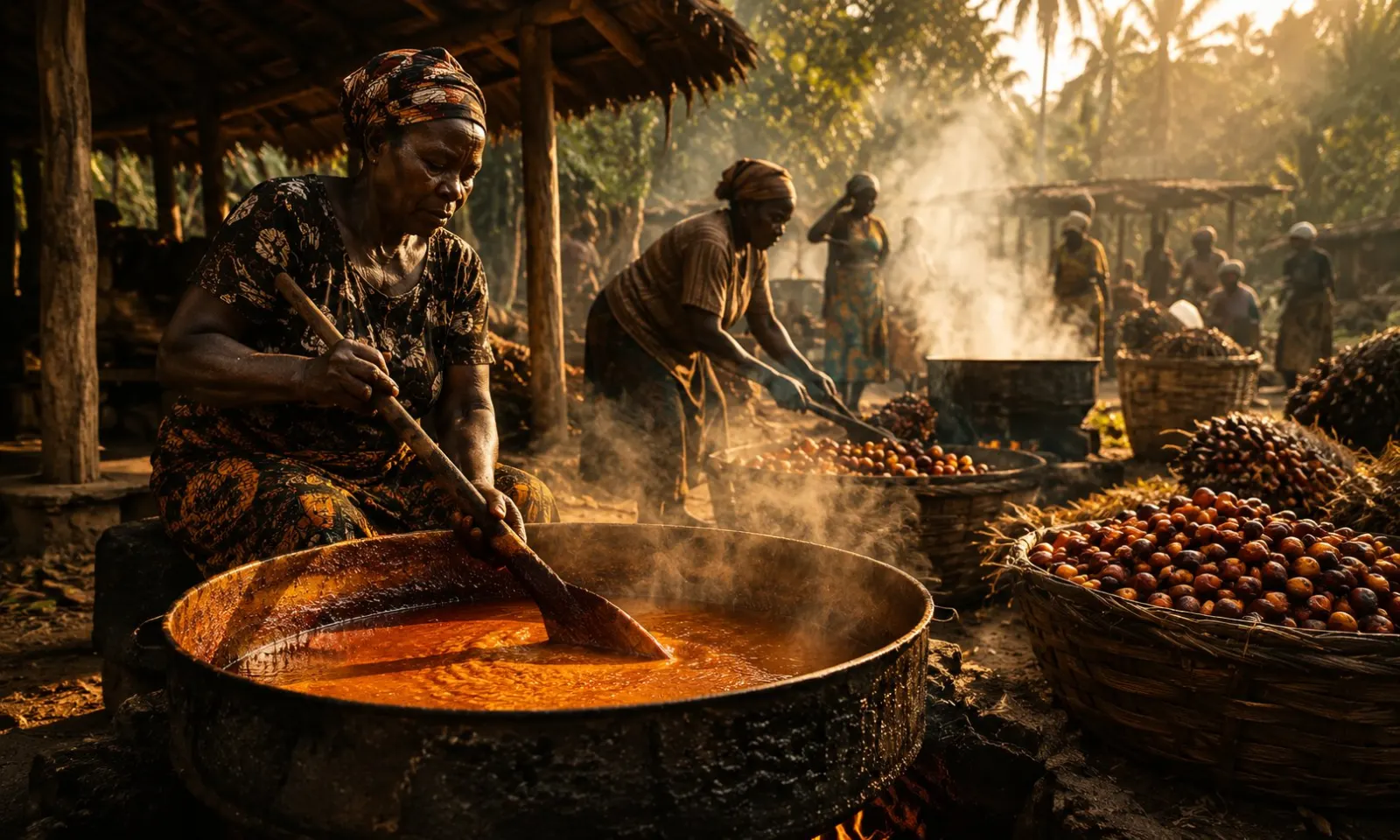
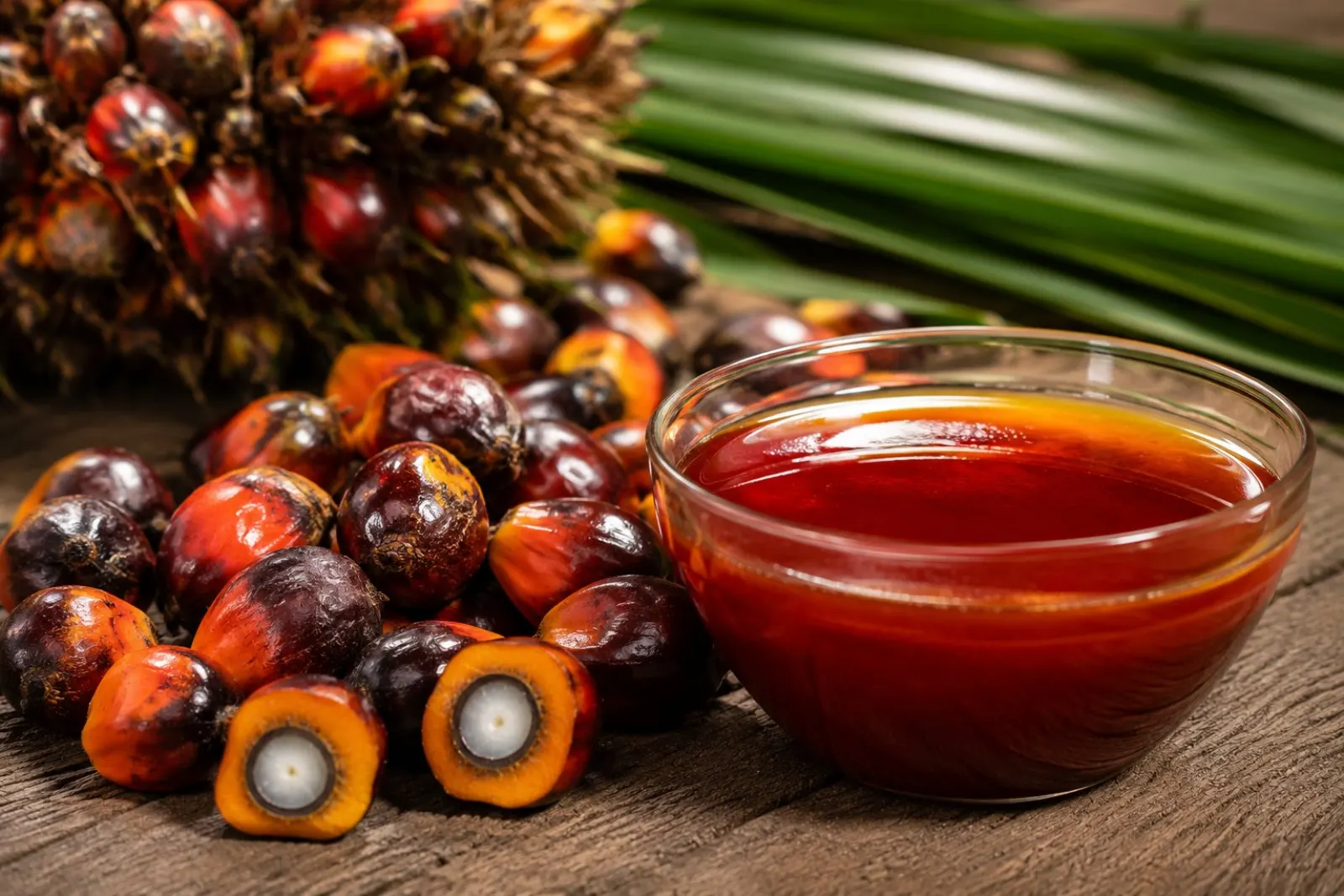
Nigeria's palm oil story is told in the hands of the farmer carrying fresh fruit bunches at dawn. In the amber pour of first-press crude oil. In the green canopy of a smallholder farm in Cross River tended by the same family across three generations.


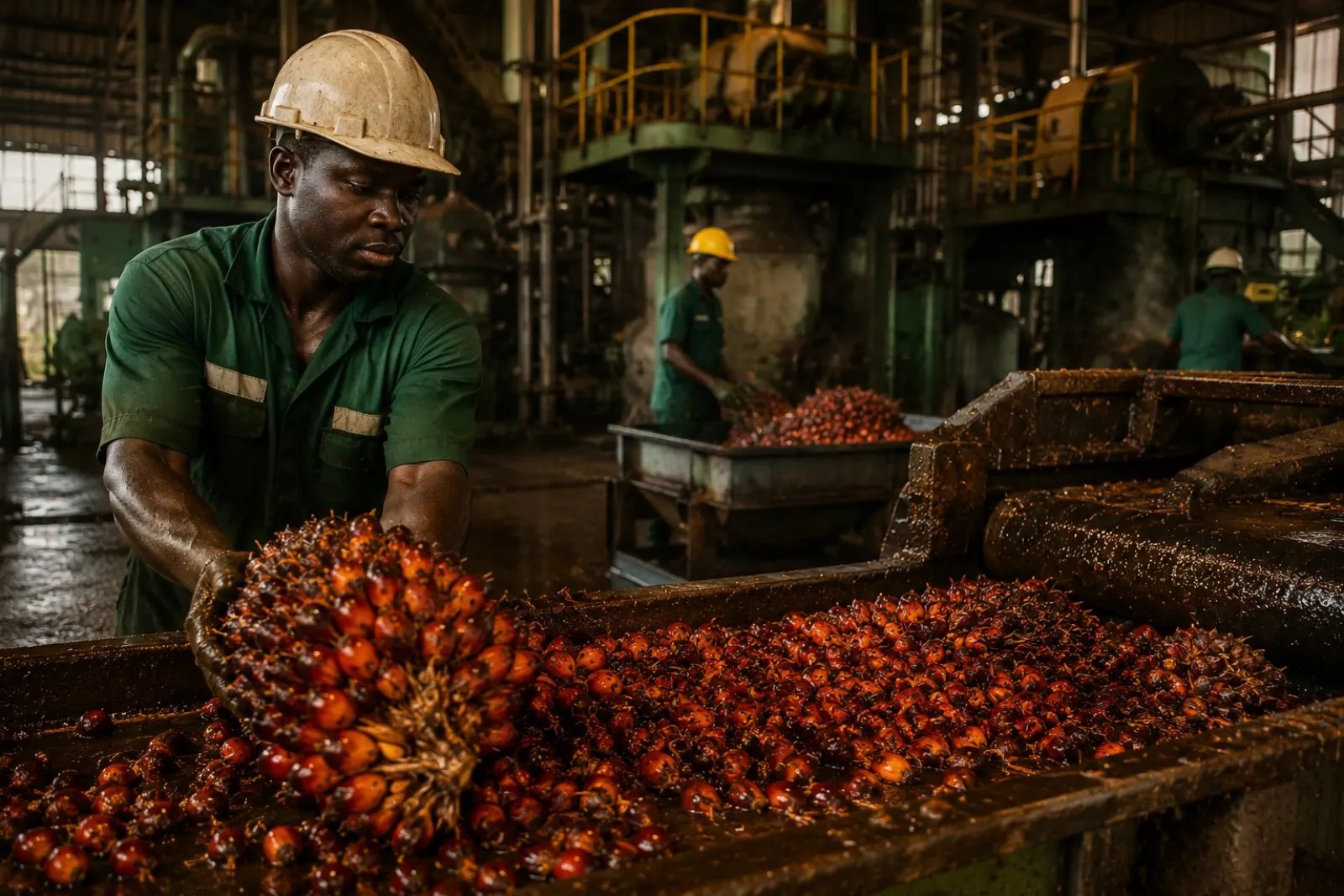
The industrial processing facilities across Nigeria's palm belt represent decades of investment and institutional knowledge. Palm Oil Exchange works to connect them with the finance, standards, and markets they need to operate at their full potential — translating Nigeria's agricultural heritage into genuine global export power.
Explore the Industry
Nigerian crude palm oil, when properly produced and processed, is among the finest in the world. Its deep amber colour, natural carotenoid content, and distinctive character are qualities that premium markets increasingly value and seek out. Palm Oil Exchange's work helps producers communicate these qualities effectively to global buyers.
The journey from fresh fruit bunch to export-ready palm oil is one of the most value-dense transformations in African agriculture — and Palm Oil Exchange is committed to ensuring Nigerian producers capture every step of that value.
Get In Touch
Whether you are a farmer, a buyer, an investor, a policy maker, or a journalist — we are here to engage seriously and substantively.
This industry moves forward through relationships. Tell us who you are, what you are working on, and what you need — and we will respond with the honesty, speed, and substance the conversation deserves.
5 Kokoma Close, Buchanan Crescent
Abuja, Nigeria
No 3 Catternach Street GRA Enugu
Enugu State
Gomays Plaza
90 Atekong Drive, Calabar
Cross River State
info@palmoilexchange.org
trade@palmoilexchange.org
membership@palmoilexchange.org
media@palmoilexchange.org
Palm Oil Exchange actively welcomes international organisations, development finance institutions, research bodies, and trade associations interested in formal partnership arrangements. These conversations receive senior leadership attention.
The decisions made in the next ten years will determine whether this country reclaims its position as Africa's foremost palm oil power.
Read Our Story